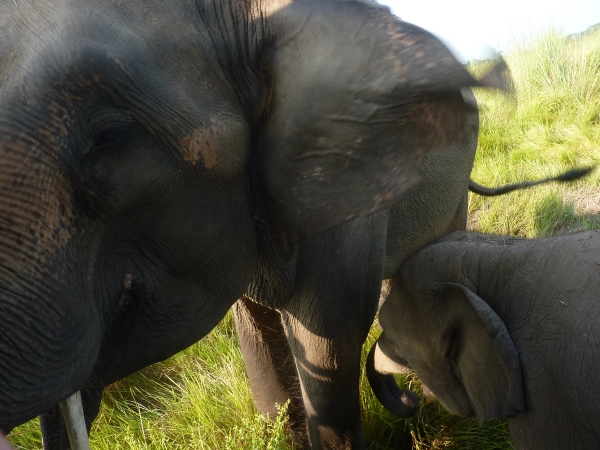
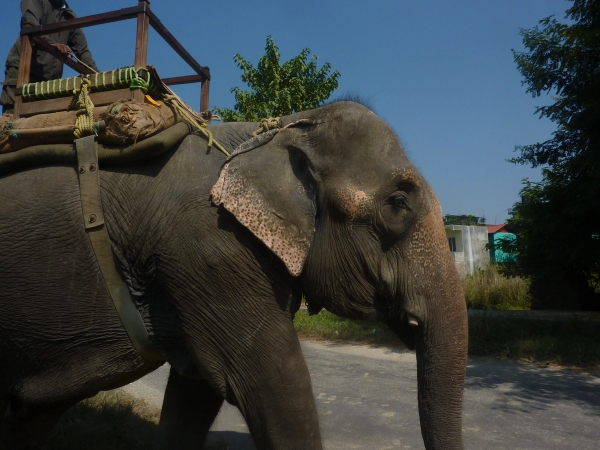
You don’t see an elephant in the middle of the road every day!
During one of our long weekends in Nepal, 13 others and I decided to take a trip to Chitwan National Park.
This text is translated using AI.
View the original article here.We got up at 5:45 to take a jeep to Chitwan. The national park is located in the south of Nepal and is known, among other things, for its tigers, elephants, and rhinos.
The five-hour drive made me realize that I was genuinely tired of the roads in Nepal. The roads are so bumpy that it feels like being inside a tumble dryer.
Our first encounter with Chitwan was running into an elephant in the middle of the street. That’s not something you experience every day!

We arrived at our hotel in the middle of the day and immediately noticed the difference in temperature now that we had come down from the mountains and closer to sea level. In Pokhara it had started to get colder, but here it was almost thirty degrees during the day and the air was humid.
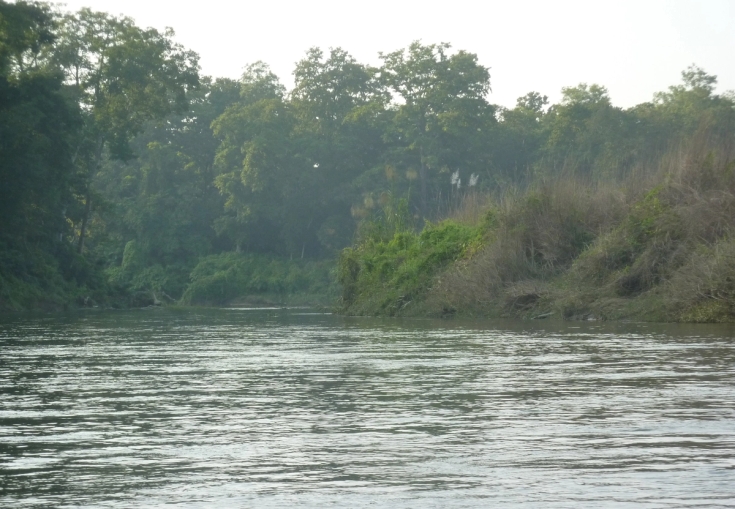
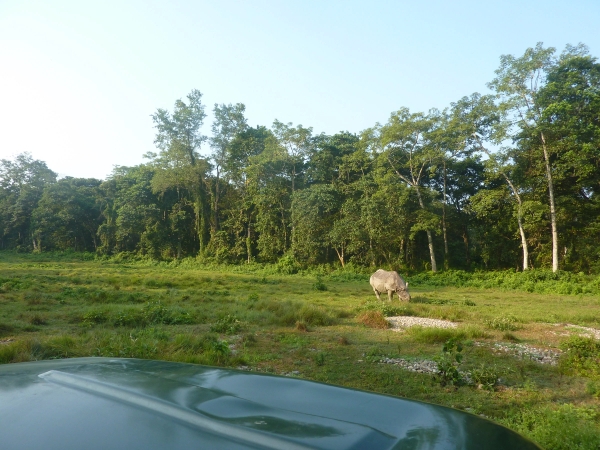
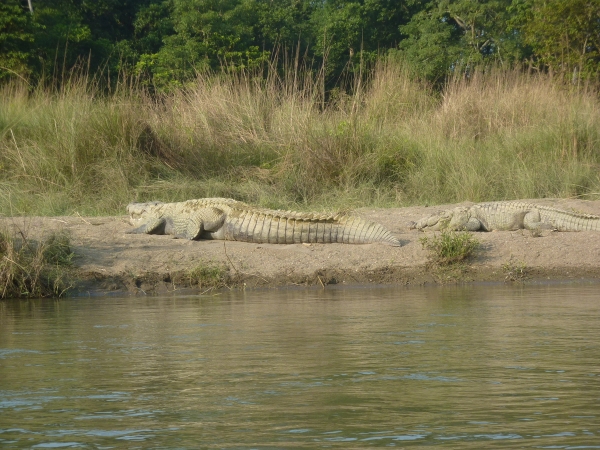
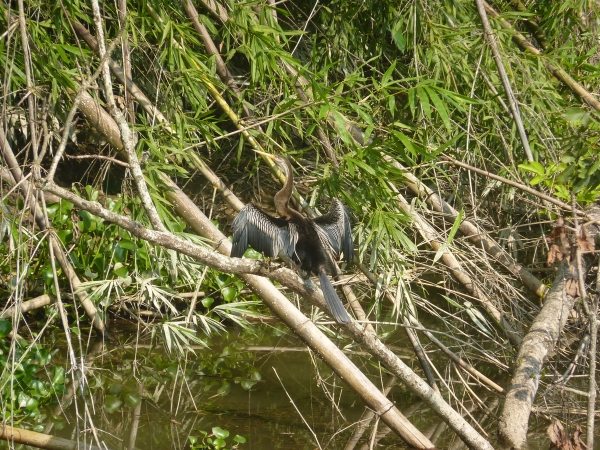
After having lunch, we set out on our first safari trip: a canoe safari and a walk in the jungle. We got into the canoe and were guided down the river, where we saw crocodiles, lots of birds, and a rhinoceros walking along the river.

It was exciting to see everything so close up in real life. After finishing the canoe trip, we set out on a short walk through the jungle.
We saw very little, apart from some rhinos far away grazing in the lotus field. “A rare sight,” said the guide.
The hunt for the tiger wasn’t over yet. We stopped by an elephant breeding reserve, where there were lots of cute baby elephants! In addition, we saw some deer on our trip through the jungle, and a gigantic anthill.

The evenings in Chitwan were mostly spent playing cards and waiting a long time for dinner, which took ages for the hotel restaurant to prepare. It was really great when the food finally arrived. The rest of the evening was spent playing Mafia and Among Us.
The next day we got up early for a jeep safari, where we were greeted by the sight of a rhinoceros before we had even started the safari. Unfortunately, this also turned out to be the trip’s last rhinoceros.
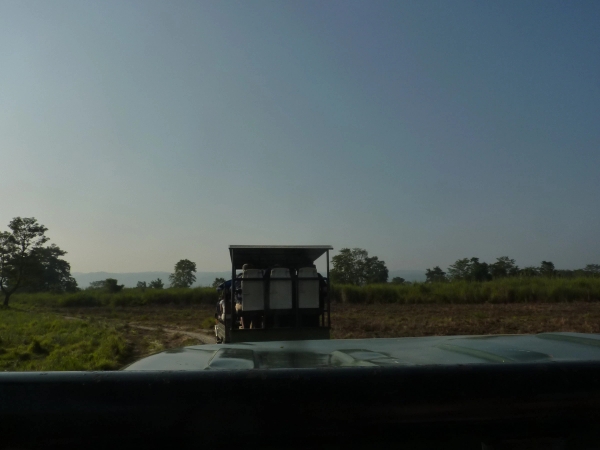
However, we did see several birds, deer, and crocodiles during our 4-hour jeep safari. Once again, luck was not on our side, and the hunt for the tiger ended without us achieving our goal. All in all, the safari was a very exciting experience!

We took the rest of the day to relax, sunbathe, and swim in the hotel pool. It was nice to be able to cool down from the intense heat. The evening before we went back to Pokhara, we went into the local town of Sauraha to have dinner and go out on the town.
Sauraha reminded me of a miniature version of Pokhara’s lakeside, where the students usually live. There were lots of gift shops, restaurants, and bars here.
I rode in a tuk-tuk for the first time ever in Chitwan, and it was also the first time I had seen one during my stay in Nepal. In Kathmandu and Pokhara they almost only have cars and motorbikes, and no tuk-tuks.

All in all, my two days in Chitwan were a nice break from exam stress and a small change of scenery from Pokhara, which we had gotten to know quite well.
Some people think Nepal is only mountains, but it’s so much more than that. If you’ve already been in the mountains or want to do something other than trekking, a trip to the peaceful and warm Chitwan is recommended!