Study Power, Politics, and Religion in Buenos Aires
Subject responsible for Power, Politics, and Religion in Argentina, Cecilia Salinas, introduces the course offered for the first time in the fall of 2026.
This text is translated using AI.
View the original article here.Are you curious about how power shapes politics, religion, and society? Then the course 'Power, Politics, and Religion' is for you!
My name is Cecilia and I am the course coordinator, which grants 30 ECTS credits from OsloMet. In the course, we explore how power and historical processes are expressed in everyday life – and how power is experienced by people in different positions. We study this with a particular focus on three Latin American countries: Argentina, Brazil, and Bolivia.
Power is, among other things, about inequality in material and economic resources, about the ability to define one's own way of life, about access to – or lack of – networks, and about exclusion.

Often this also involves being defined as a minority. Power is exercised and maintained through commands, laws, sanctions, rules, procedures, and bureaucracy – but also through language, religion, culture, and notions of what is perceived as normal.
Therefore, it is particularly exciting and engaging to work with perspectives on wealth disparities, environmental challenges, cultural conflicts, and minority-majority issues (including indigenous questions) through direct experience, by being a guest in another country and culture.
When one experiences not knowing the rules, laws, procedures, bureaucracy – and perhaps not even the language or cultural expressions, one also gains a deeper insight into how power can operate in practice.

I believe it is particularly valuable to study power, politics, and religion in Argentina because the country has such a complex history.
The country's past has been marked by colonialism, military dictatorship, economic crises, and strong social movements. This provides a rich empirical basis for exploring how power is not only exercised, but also how it is challenged and negotiated.
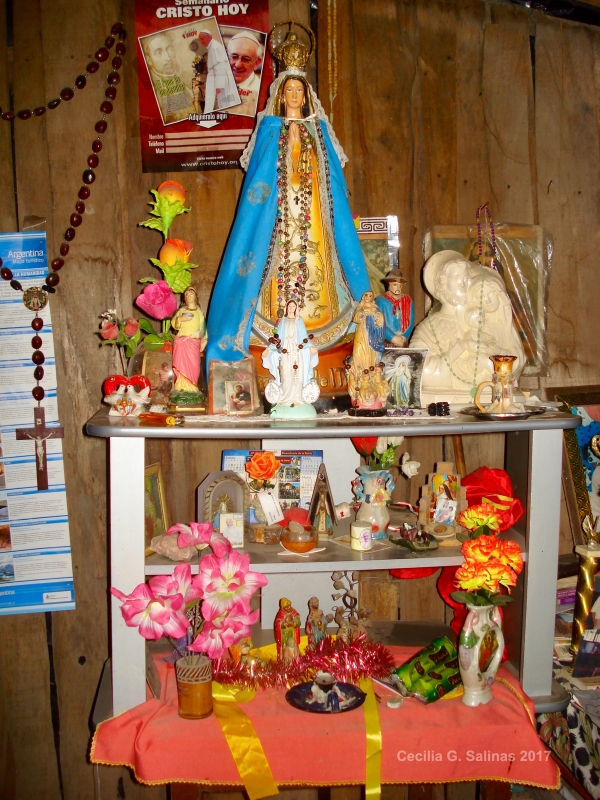
In Argentina, issues of inequality, political mobilization, the role of religion in society, indigenous rights, and the relationship between the state and civil society become apparent in everyday life, institutions, and public spaces.

Being present here makes it possible to see how global power structures find local expressions – and how people navigate, oppose, and reshape them.
As an anthropologist, I am very fond of the anthropological method, which among other things presupposes that the researcher leaves their comfort zone and the familiar in order to learn.
Through this learning, familiar phenomena can be seen in a new light. Immersing oneself in a new culture not only provides new perspectives on the world but also new insights into oneself and what one previously took for granted in one's own life. It is at this intersection that a deep, holistic, and lasting learning outcome occurs.

We don't just learn by reading books, but also through practice and experience. Going to Argentina to study means exposing oneself to different ways of social interaction, hearing a different language in everyday life, and experiencing different smells, tastes, and soundscapes than those one is familiar with from one's own country.
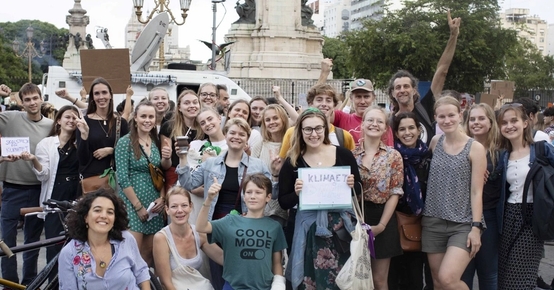
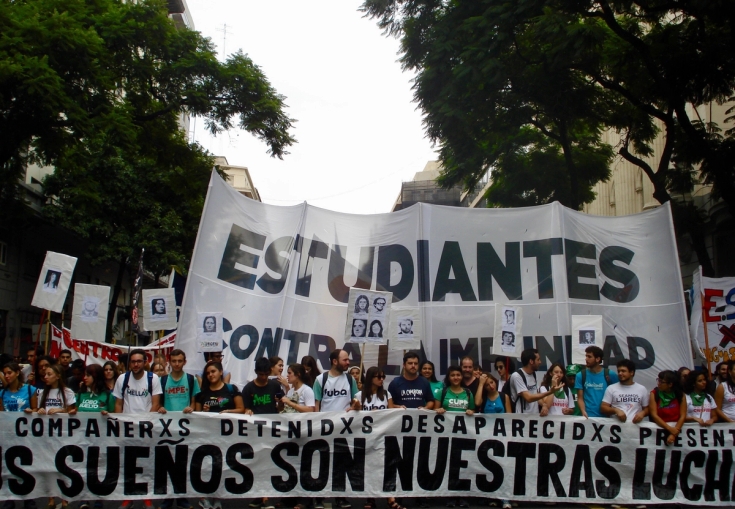
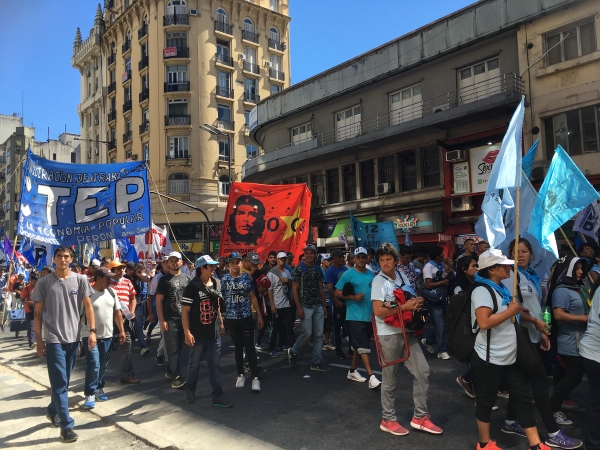
Politics is something that is experienced up close and vividly, and one will often see large demonstrations and protests in public spaces.
When one is a guest in a society characterized by strong historical experiences with power, resistance, and social inequality, abstract concepts become concrete and experienced.
Learn more about Buenos Aires as a study city

- Argentina
- Student blog
Tips og triks: Buenos Aires
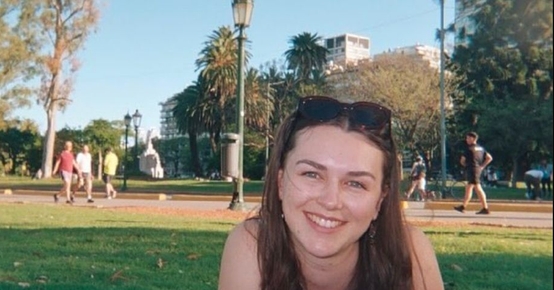
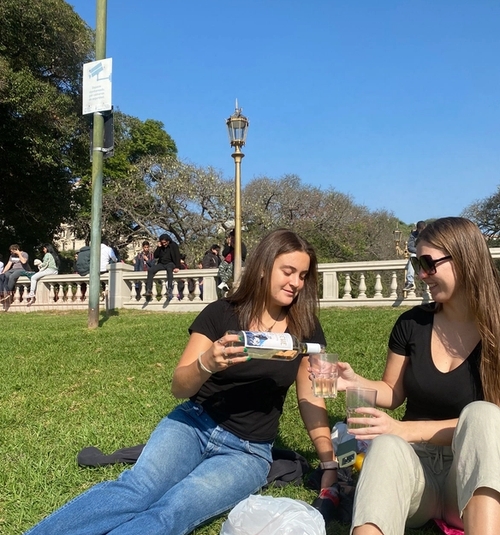
The subject is taught in Buenos Aires. This huge and beautiful city offers a rich nightlife, nature experiences, shopping, art, good food and drink, and free concerts in the city's many parks and green spaces, to mention a few.
I am so excited to teach this subject! I am Argentine, born and raised in Buenos Aires, with a background from Northern Argentina.
I have lived in Norway for more than two decades, and taught subjects focusing on Latin America and decolonization. It is therefore a great pleasure to have the opportunity to teach in my own hometown this time.
I look forward to being able to share perspectives on power, politics, religion, culture, and social media – perspectives that can contribute to understanding a global world in profound upheaval, and which are largely caught up in historical processes that we thought we had left behind.
All images in the article are taken by Cecilia Salinas.