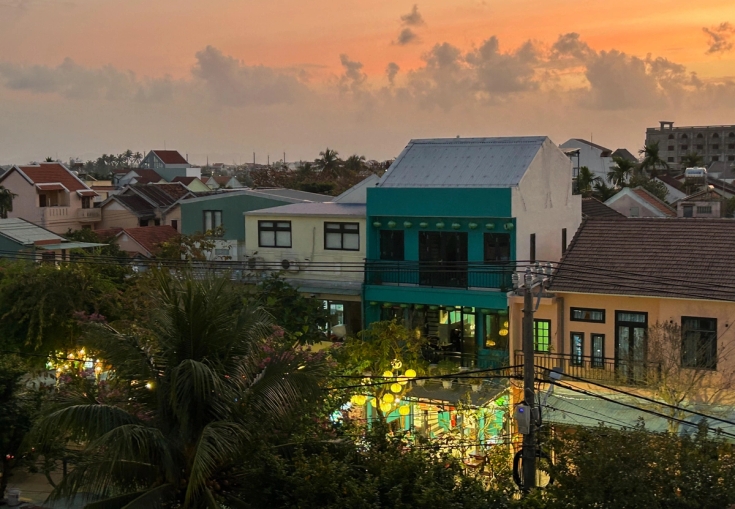
My first encounter with Hoi An
It’s already been a week since I arrived in Hoi An for the first time. The days have flown by, filled with new impressions and experiences, and there hasn’t been much time to really take it all in.
This text is translated using AI.
View the original article here.Now I finally feel that I’m starting to settle down a bit and get comfortable with a new routine. Here are some thoughts and observations about Hoi An after my first week in the city.
One of the things that has felt unfamiliar about coming here is the traffic. Even though the traffic in Hoi An is nowhere near as chaotic as in larger Vietnamese cities like Hanoi and Ho Chi Minh City, it can still feel intense.

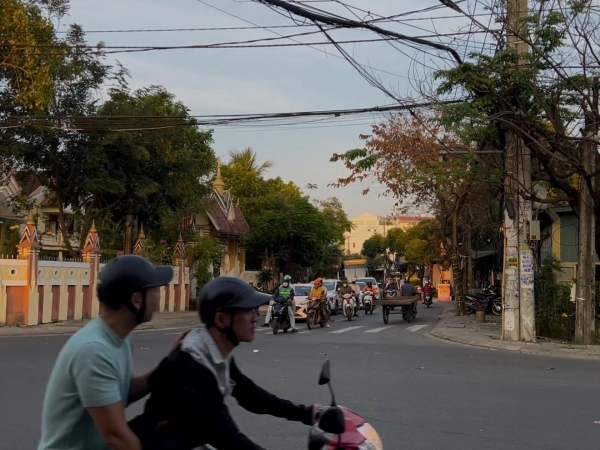
There’s constant honking, and what feels like a total absence of rules. If you want to cross the road, there’s no point waiting for someone to stop for you – you’ll never get anywhere that way.
Being used to Norwegian traffic, I’ve had to adapt to this new system. But it’s taken much less time than I was afraid it would in those first few days!
Already after one week I feel confident when I bike to school, and I no longer get a racing pulse every time I cross the road.


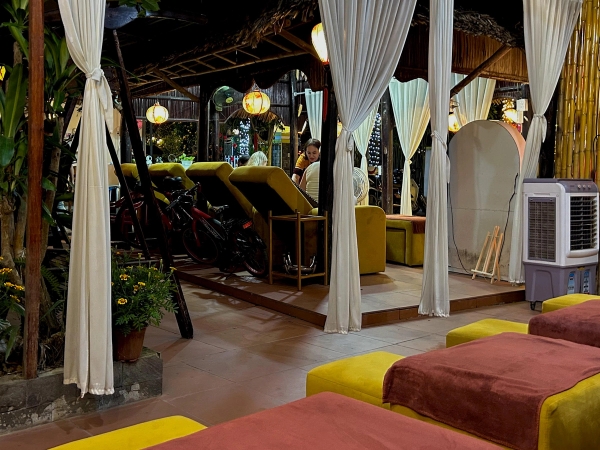
Another thing I quickly noticed is how cheap it is to live here. This is especially true for food in cafés and local eateries, but also for services like Grab (taxi), massages, and getting tailor-made clothes.
For example, a dinner typically costs around 25 Norwegian kroner, which means we can eat out every day with a clear conscience.
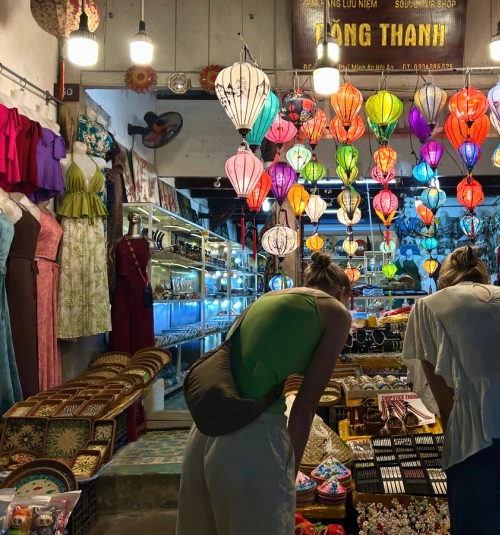
Getting tailor-made clothes varies in price depending on what you want to make, which tailor you go to, and how good you are at bargaining. In any case, it’s much cheaper than it would be in Norway, and something you almost have to do when visiting Hoi An.
The fact that it’s quite affordable to live here means you can treat yourself to things you rarely do in Norway, while still staying within a student budget.

Another really nice thing about Hoi An is how accessible everything is. The city isn’t that big, so you can pretty much walk or cycle anywhere.
Most of the students bought themselves a bike on our first day here, which is very practical for getting to school or the beach. In addition, Grab is always easily available if you want to get somewhere quickly.

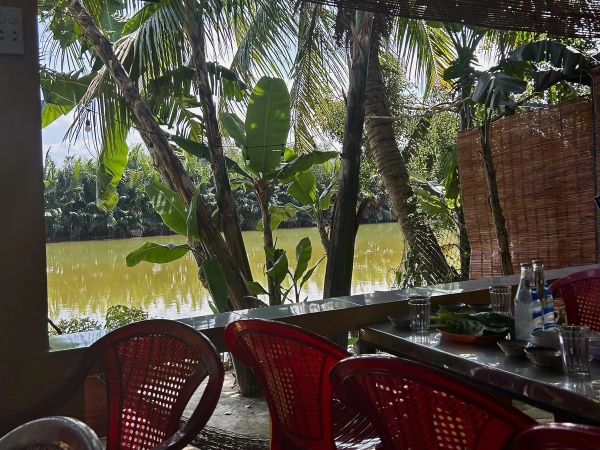
Even though the city isn’t that big, it has an enormous selection of cafés and restaurants. No matter where you go, there are always several places nearby where you can get food and drinks.
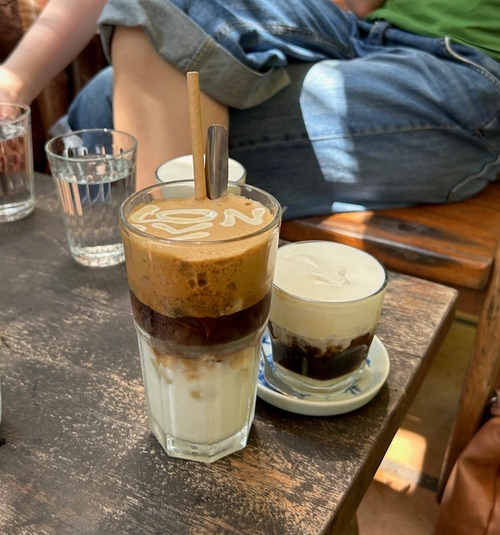
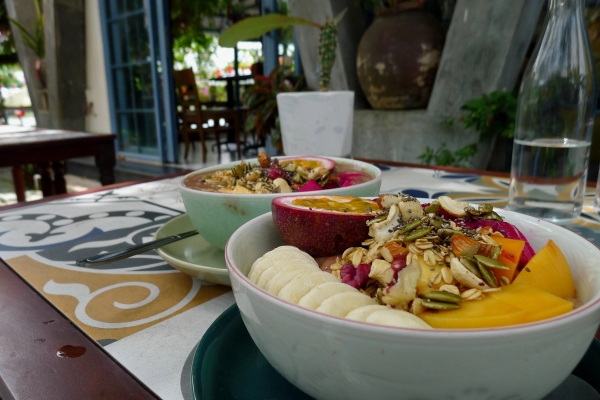
You can find everything from local noodle soups served on plastic chairs by the roadside to trendy cafés with smoothie bowls and iced coffee. Right now, at the beginning, the selection feels almost overwhelming, and it’s not so easy to know where you should go. I’m looking forward to trying as many places as possible and finding my own favorites.

Another thing that’s hard not to notice is that Vietnamese people love karaoke. I was aware that karaoke is a bigger thing in Vietnam than in Norway, but it turns out the contrast is even clearer than I had imagined.
Here it’s socially accepted to sing karaoke at any time, even early in the morning, with a microphone and speakers at full volume. It might sound a bit exhausting, but for now I just see it as a fun cultural difference, and I think it adds to the good atmosphere in the city.
All in all, I’ve gotten an incredibly good impression of Hoi An after the first week. A lot of things are different from back home, but it’s already starting to feel more familiar. I’m excited to see what the next few weeks will bring!