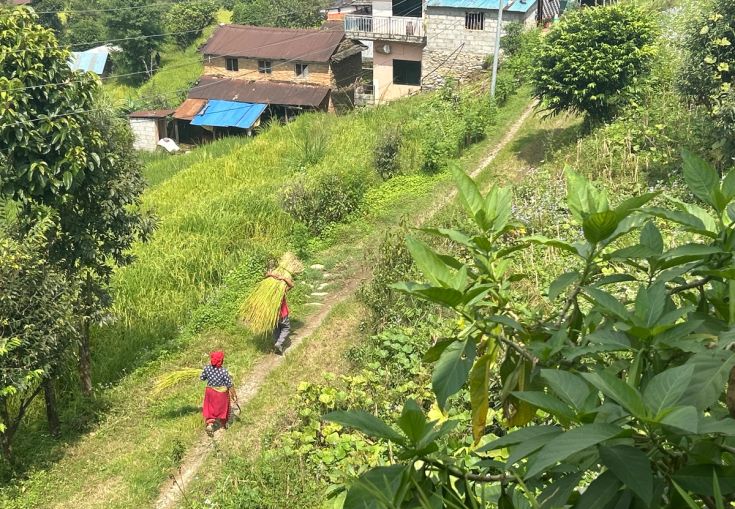
Feeling the effects of climate change firsthand
Climate change is harming Nepal, but the Nepalese continue as they always have—in harmony with nature.
This text is translated using AI.
View the original article here.This autumn, the people of Nepal have truly felt the consequences of higher temperatures and heavier rainfall. Several climate scientists have concluded that the glacial collapse that triggered the catastrophic flooding in late August was a direct result of global warming.
Just two days after that flood, there was another flood in the Rasuwa district. And now, a month and a half later, there has been yet another flood. This time it was a little closer to Pokhara, in the Budhi Gandaki River, which is about sixteen miles away from us.
There has been no cause for concern for us students, but it has been striking to witness how climate change is directly affecting the local population here.
Back home in Norway, we usually sit safely behind a screen and say, “Oh, those poor people,” before carrying on with our day in our danger-free country. Here in Nepal, however, it hits you right in the face.

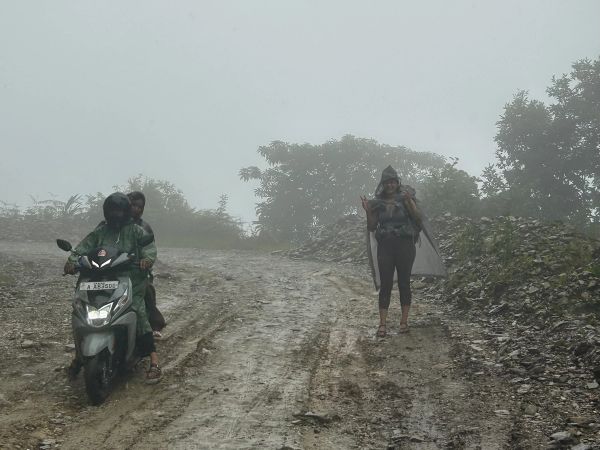
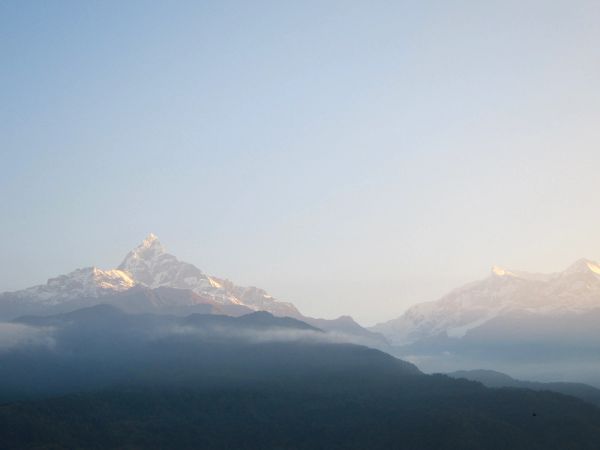
Since time immemorial, Nepal has experienced landslides and flooding due to a combination of its location at the junction of the Indian and Eurasian tectonic plates and the fact that it is home to several of the world's highest mountains.
The monsoon season, which spans June, July, August, and September in Nepal, therefore brings some landslides, avalanches, or minor flooding each year during this period.
Still, none of the locals I have spoken to have ever seen conditions like they have been this year. What does that say about the state of our climate?

On September 25, Nepal's relatively new prime minister, Balen Shah, addressed the UN General Assembly.
He emphasized how fragile the Himalayan ecosystem is, and how our ever-warming planet does not reward Nepalese people for being among the most environmentally conscious in the world, but instead subjects local communities to landslides and floods because “climate change knows no borders.”
Nepal's greenhouse gas emissions account for less than 0.1 percent of the global total, and the country is investing heavily in tree planting and transitioning to hydropower. Nevertheless, like several other developing countries in the Global South, Nepal is particularly vulnerable to the consequences of greenhouse gas emissions.

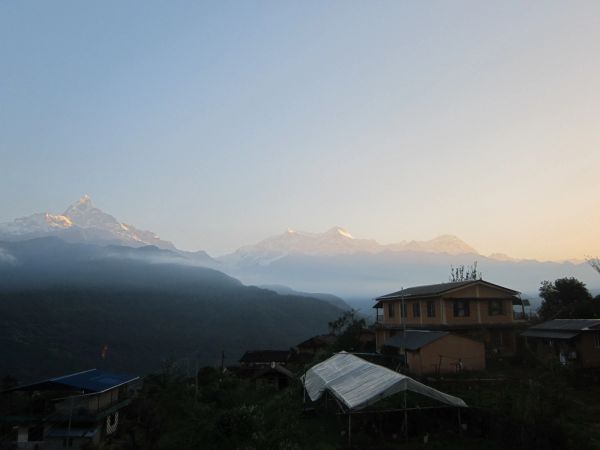
Now you may be thinking that this turned into a somewhat rather depressing blog post. I know that there are thousands of talented people around the world working toward a more sustainable future.
There were also many volunteers from other countries who came to help the local population after the devastating floods in August. There is always hope, even when things feel hopeless.
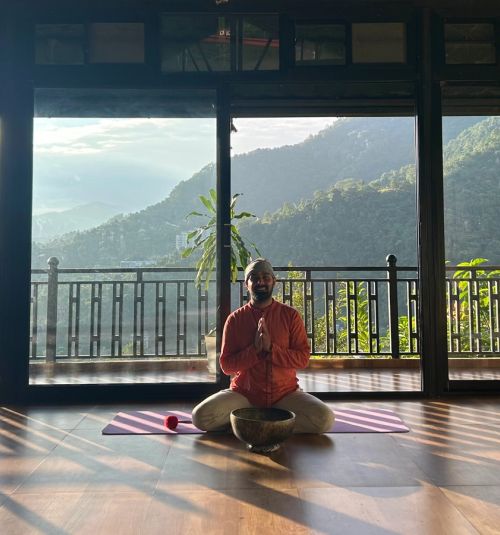
We met some passionate people like this at the eco-farm where we stayed during the yoga retreat in Astam. They produced drinking water by filtering rainwater and grew all their own food. They had also developed a system that used sewage from the hotel rooms to produce biofuel. Impressive stuff!
So, to take a hot shower, we had to go outside and fill a bucket with heated water, then use a scoop to pour it over ourselves in the bathroom.

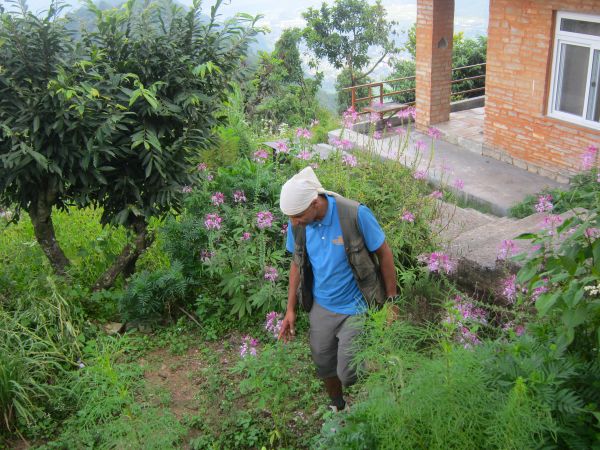
Bednidhi Adhikari, who grew up on the farm in Astam and now co-manages the hotel located there, explained that, as Indigenous people, they strive to live in harmony with nature.
“Mother Earth is all we have. The least we can do is treat her with respect,” he said before picking a flower in full bloom and eagerly asking each of us in turn to smell it. This made me wonder: When did the rest of us stop living in harmony with nature?

The boring, but also most accurate, answer is probably that it happened after the Industrial Revolution in the 18th century.
Work that had previously been carried out slowly by hand was mechanized, and to obtain enough energy to power all the machinery, we humans kept finding new ways to extract the Earth's resources. Since then, the world's population has grown to more than eight billion.
So we cannot suddenly stop consuming vast amounts of resources now, but perhaps we can all try to learn something from the Indigenous people of Nepal. If we respect Mother Earth, perhaps she will respect us a little more in return—and allow us to live here a little longer.