Yoga amid the Himalayan mountains—a kind of spiritual experience
I've caught yoga fever, and I love it.
This text is translated using AI.
View the original article here.Suddenly, four weeks have passed here in beautiful Nepal.
The culture shock has worn off, I’ve gotten to know my lively fellow students well, and I’ve settled into a kind of daily routine amid the delightful South Asian bustle of the city of Pokhara.
By far my favorite of these routines is yoga classes. Several of us take a yoga class lasting about an hour and a half every Tuesday and Thursday before lectures, and several of us have attended no fewer than two yoga retreats during the first half of our study abroad program.
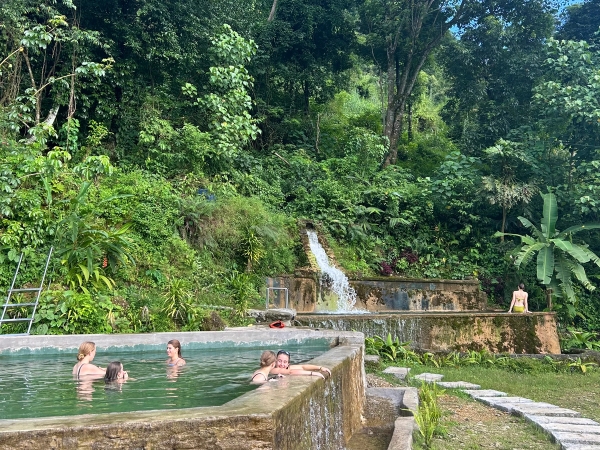
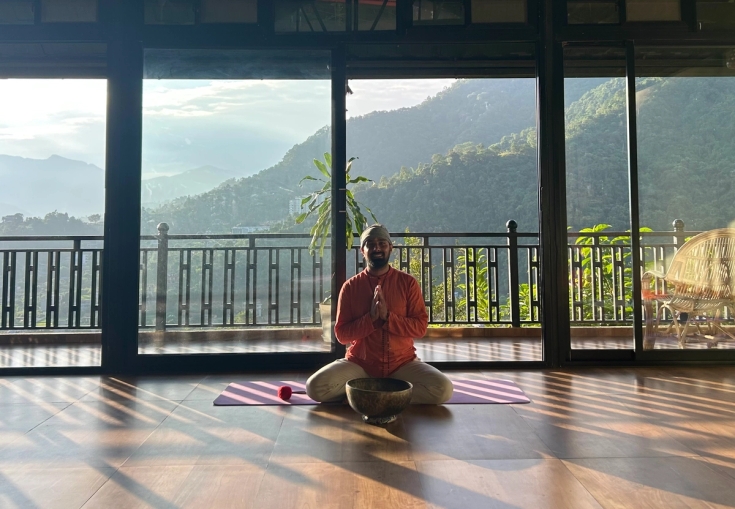
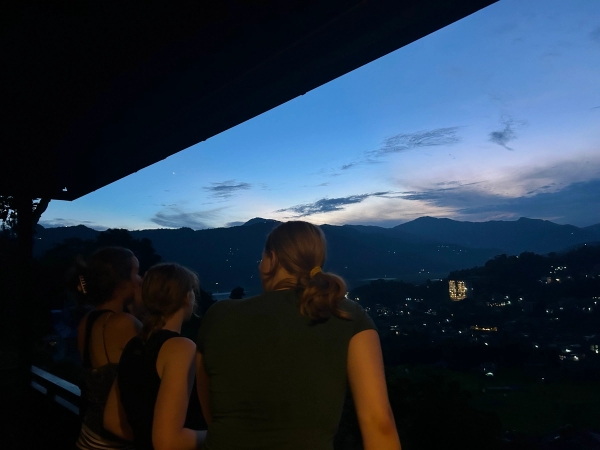
Both Green Hills Yoga Retreat, up in the hills north of the lake, and Madan Yoga Retreat in the village of Astam, 1,500 meters above sea level, offer views of the Himalayas.
Yoga and meditation have been an important part of Nepalese culture for over 5,000 years.
The earliest evidence of Nepalese people practicing yoga can be found in several ancient Hindu texts, and after Buddha, the great proponent of meditation, was born in Lumbini, Nepal, around 500 BCE, meditation became even more important to many people.
And that is probably precisely why practicing yoga here, at the heart of it all, feels so right.

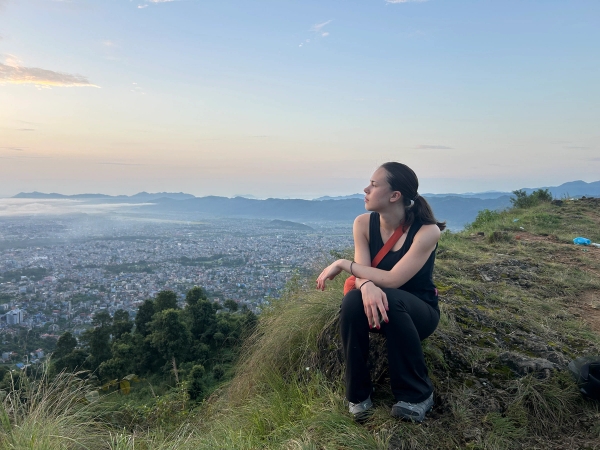
Unlike in Norway, where yoga classes usually consist of gentle stretching, perhaps some strength exercises, and relaxation at the end, yoga classes in Nepal feel like a kind of spiritual experience.
The instructor usually begins the class by asking us to take a few deep breaths all the way down into our bellies before we chant the universal “aum” sound in unison, which in the yoga tradition is considered the fundamental vibration of the universe.
At first, it felt like I was trying to parody a Buddhist, but after doing it a few times, the collective sound of our voices chanting “aum” out the windows felt soothing.
The instructor then guides us through various poses and dynamic “yoga flows.” The latter might, for example, be a so-called sun salutation, a set routine often performed in the morning to warm up the body and greet the sun.

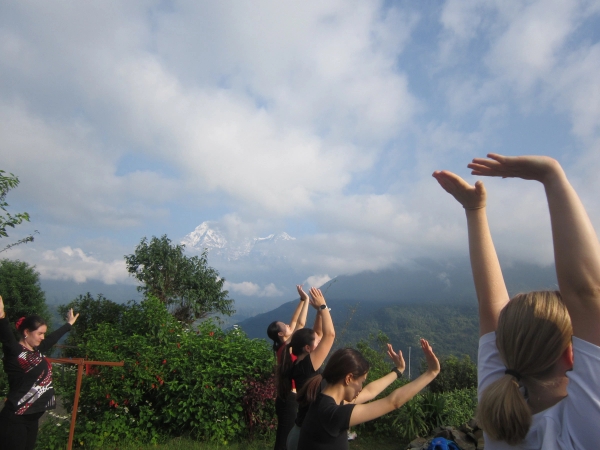
As I stretch my hands into the air and arch my back as far as I can, it feels as though my body is being drawn up toward the sun like a bright pink flower.
Although some yoga poses are challenging for the brain, muscles, and bones, the peaceful atmosphere and deep breathing make them feel less strenuous.
One particularly helpful piece of advice I’ve received for not giving the thoughts in your head too much space while practicing is to think of them as clouds drifting across a blue sky. You don’t get caught up in them or try to explain anything; instead, you watch them grow and then drift away.

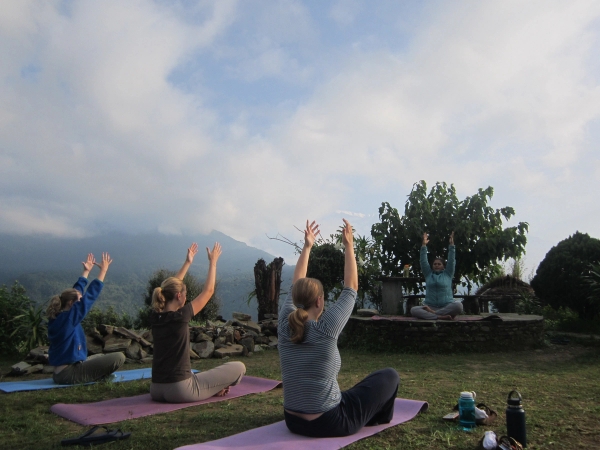
When the instructor lowers their voice and pauses longer between each sentence, you know the class is coming to an end.
The session often ends by chanting the “aum” sound a few more times, followed by “shanti, shanti, shantiii,” which means peace and inner calm in Nepali. The idea is to cultivate peaceful energy within ourselves before spreading it outward.
I know it sounds cliché, but then again, we all live on a floating mass of water and rock in an infinite universe we know almost nothing about—so maybe feeling a little awkward because you're trying something new isn't such a big deal?

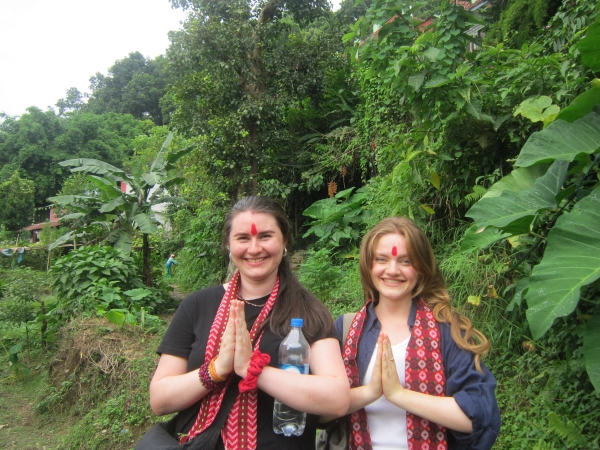
At Green Hills Yoga Retreat, we took part in something called “mantra chanting” one Saturday evening.
There were eleven Scandinavian girls, a Malaysian woman, and a Swiss man sitting around a candle, while four Nepalese yoga instructors played drums, metal bowls, and tambourines as we sang Nepalese words whose meaning we had no idea about.
Suddenly, the instructors started dancing. We somewhat reluctantly joined in, and before we knew it, the yoga studio had turned into a dance floor with a huge mosh pit in the middle. This was definitely not what I had expected when I brought ten of my fellow students along on a yoga retreat, but I wouldn't have missed the experience for anything!

I'm not going to sit here and claim that absolutely everyone should take up meditation and yoga. But I'm going to anyway.
Just imagine how peaceful the world would become! Perhaps some world leaders would devote a little less energy to constant economic growth and a little more to making the world a more peaceful place?
Our textbook, “Peace and Conflict Studies” by David Barash and Charles Webel, states clearly that leaders who are under a great deal of pressure and stress make the most hasty—and therefore often the worst—decisions for our planet. Perhaps introducing mandatory breathing exercises before important meetings with people in suits wouldn’t be the worst idea in the world?