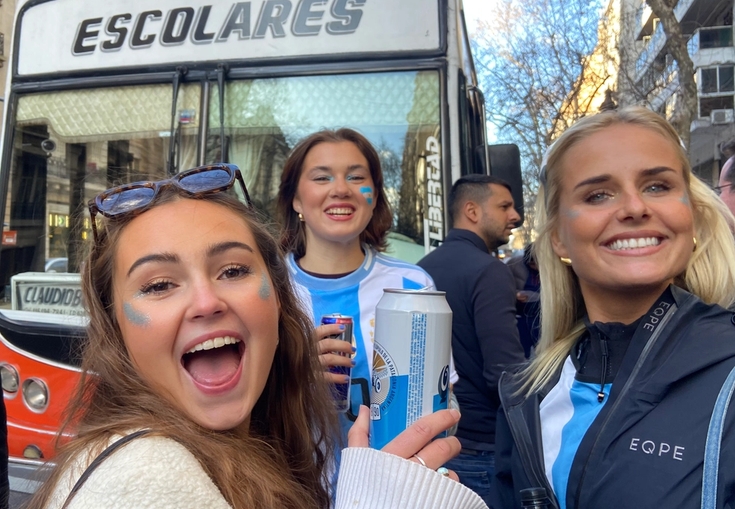
In Argentina, football is a religion
Going to a football match in Argentina is an incredible experience, even for the least interested in football. I can say that for sure, as I categorize myself as one of them.
This text is translated using AI.
View the original article here.I played football when I was a child, and loved it, but I have never been able to take an interest in a football match in my life, despite how many I have watched with my football-loving father. That's how it was for me – until I went to a football match in Argentina.

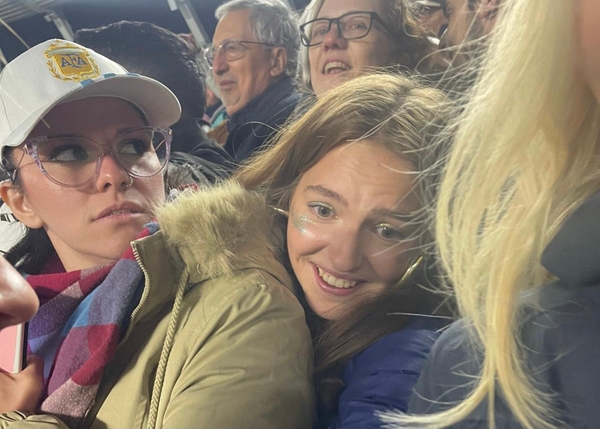
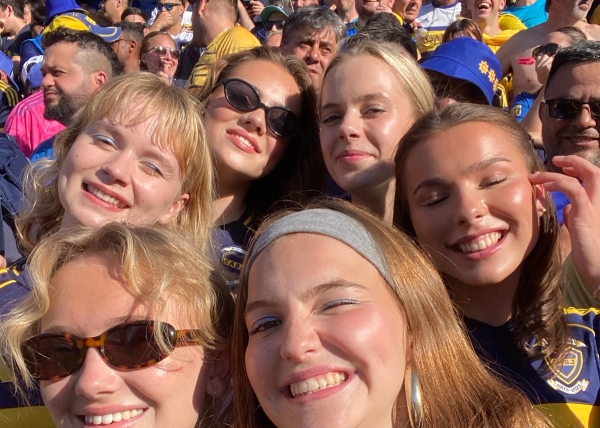
The atmosphere was electric, with a stadium so sold out that we were packed like sardines at the very top of the stairs.
We had actually managed to get tickets to what was presumably going to be the icon Lionel Messi's last international match in his home country. Messi is indeed going to retire from international football after the next World Cup.

Football is like a religion in Argentina. That says a lot, considering many Argentinians are quite religious. Catholicism is the largest religion in the country, and its iconography has spilled over into the 'football religion'.
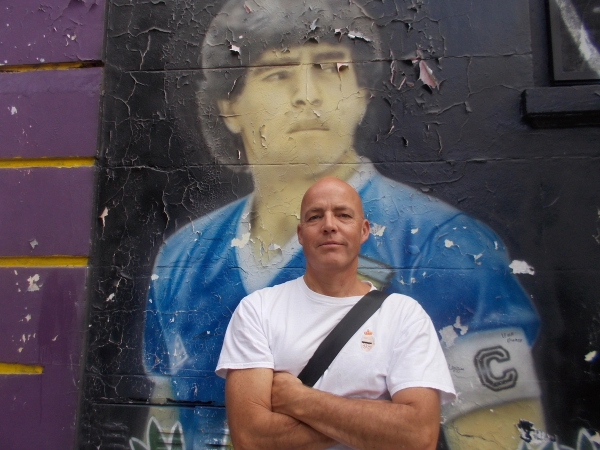
All over Buenos Aires, you'll find murals of Lionel Messi and Diego Maradona. These football heroes compete to be the ultimate football god here.

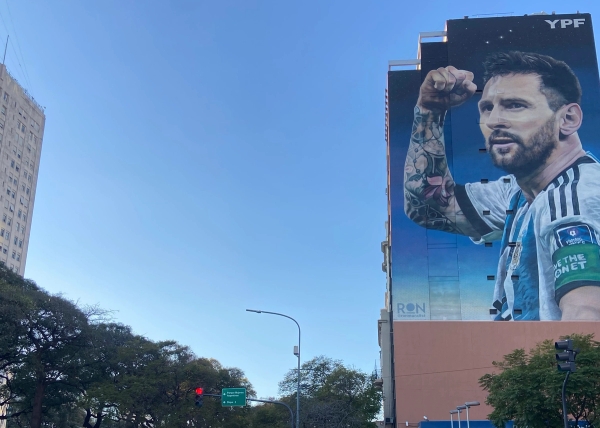
They each represent their own generation, and it is probably Maradona who is the most important of all. But both have experienced becoming world champions for Argentina, both as team captain and top scorer.
The major difference between the two is that Messi has played his entire career in Europe, and eventually now in the USA, while Maradona had several years in the Argentine league before he moved to Europe.
This probably makes the Argentinians regard Maradona as the greatest among their football gods.

The match we watched was between Argentina and Venezuela. This was an official qualifying match for the Soccer World Cup that's coming this summer in the USA, Canada, and Mexico.
Argentina clearly led their group and was essentially already qualified, but it was incredibly exciting to watch the match nonetheless.

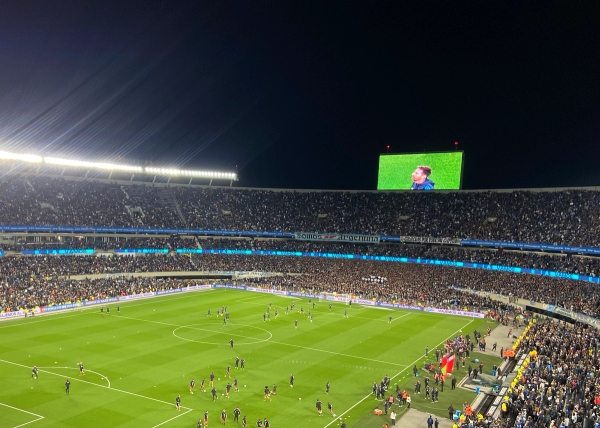
Argentina won 4-0 and Messi scored two goals. Those of us who were there can talk about it for the rest of our lives, that we were present and witnessed Messi's last international match and goals for Argentina on home soil.

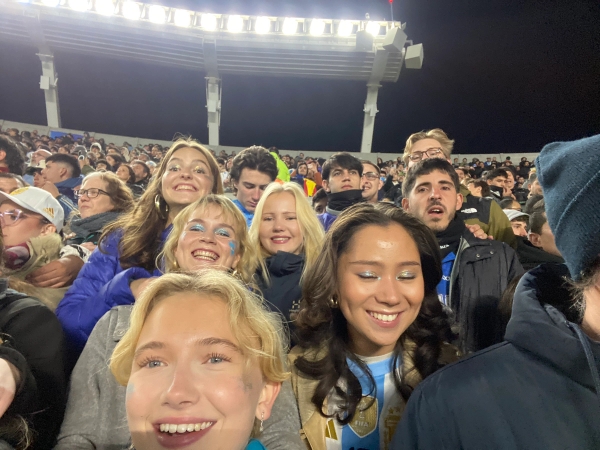
In addition to having (had) some of the world's best players, Argentina also has one of the world's greatest derbies.
The rivalry between two of the clubs in Buenos Aires – Boca Juniors and River Plate – is so intense that we were advised not to wear football jerseys in the wrong neighborhoods.

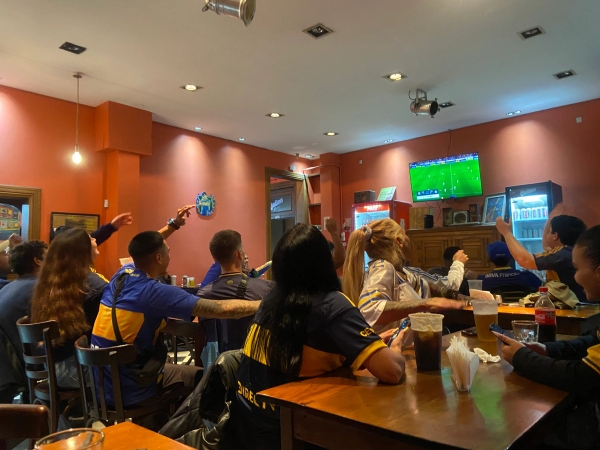
During our stay, we also managed to watch “El superclásico” - the match between Boca and River - at a football pub.
We had already chosen our team: Boca Juniors, representing the workers and immigrants, and located closest to where we lived. Dressed in Boca jerseys, we cheered like true porteños, and to our delight, Boca Juniors won 2-0.

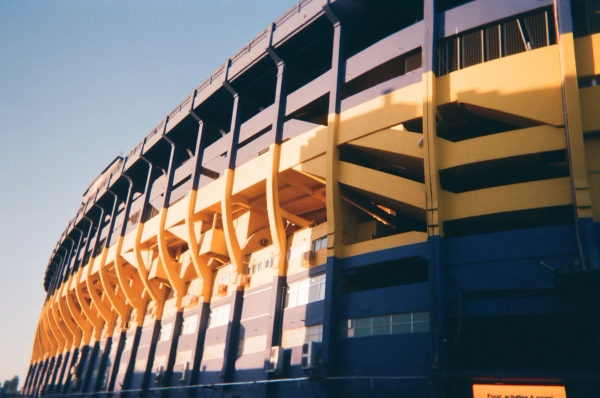
It wasn't like that when we got hold of tickets to “La bombonera” – Boca's stadium. We paid through the nose for the tickets that we got through a website that resells tickets.
The fans are indeed so die-hard that you can't access tickets without a paid membership over a long period of time. Then you can get tickets for free, and resell them for thousands of kroner.
The dedicated fans are not very fond of outsiders attending the games, and therefore you must meet a person who gives you the tickets, but never tell anyone else how you got them.

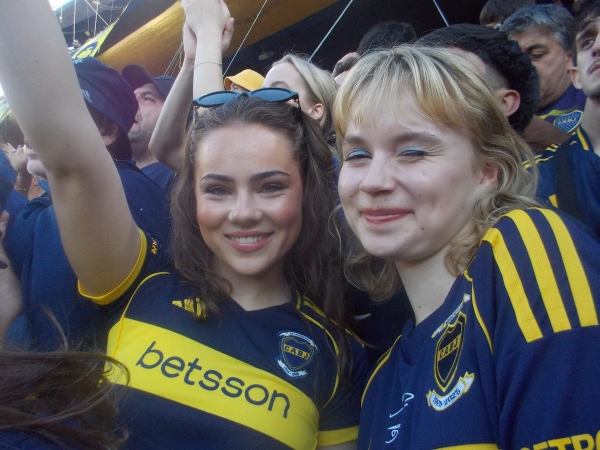
For those who really want to experience the Argentine football culture, I would recommend a visit to the La Boca district.
This is where the Boca Juniors club is based. Maradona played for the club in two stints, first in 1981 and then again from 1995 to 1997. He won the league championship with the club during his first period.
Before we went to the Boca game, we went as a group to La Boca, a neighborhood created by immigrants who settled in this port area that is still inhabited by immigrants and workers.

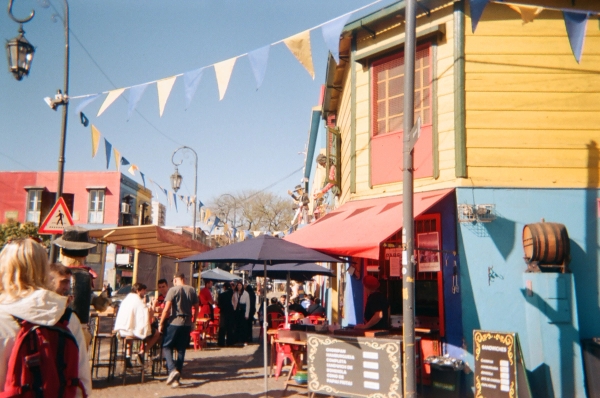
La Boca is a strange mix of authentic and extremely touristy. Nevertheless, it's a beautiful neighborhood, and far from quiet if you visit on a match day.
We squeezed into a bar and ate 'choripan' - delicious Argentine street food consisting of a salty chorizo sausage in bread, topped with chimichurri, and drank Argentine beer, while we sang and shouted to the fighting spirit.
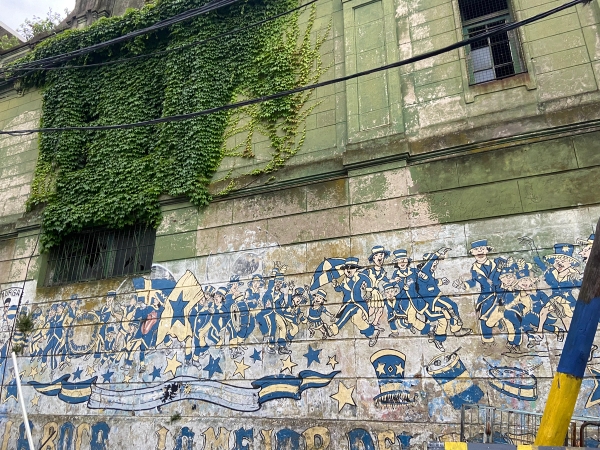
Everywhere people were dressed in the blue and yellow Boca jerseys. The colors of the jerseys come from the Swedish flag.

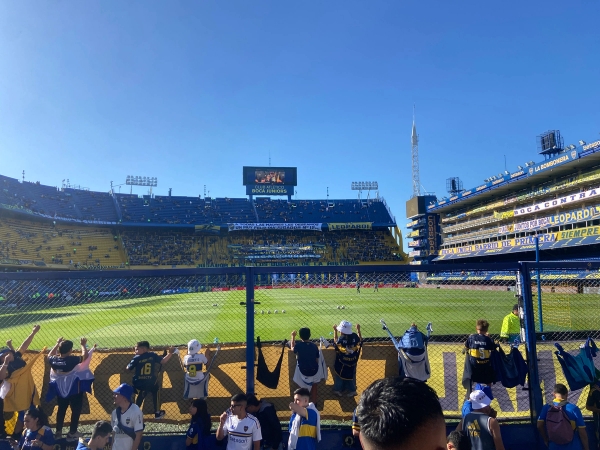
It is said that when the first residents of the neighborhood arrived at the port area, they wanted to start a football team, and decided that they would choose the same colors as the flag of the first boat that passed.
It happened to be a Swedish flag, and as we entered the stadium, people were waving our neighboring country's flag.
There were constant cheers, and we didn't even notice when the other team scored, because the fans kept singing as if it had never happened.

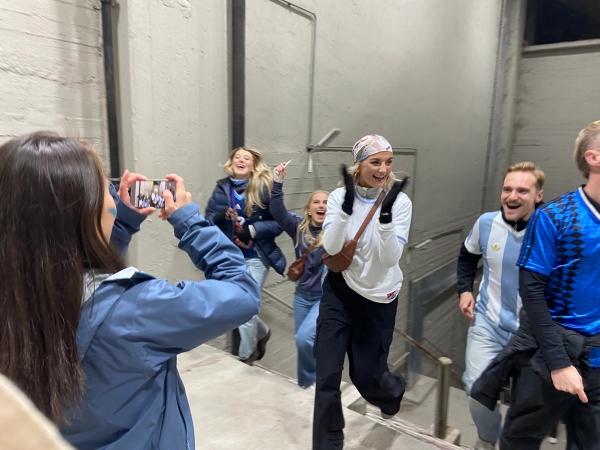
Unfortunately, the home team lost 2-1, but it didn't dampen the spirits of the fans, who sang at the top of their lungs and kept their backs straight all the way out. If you want even more intense fans, Buenos Aires has another famous team, Racing Club, known for having the craziest fans in the world.
Attending a football match in Argentina as a foreigner is definitely expensive, but it's a once-in-a-lifetime experience.
If you still don't want to spend your money on tickets, I would recommend looking for a bar in La Boca, sit down and soak up the atmosphere.

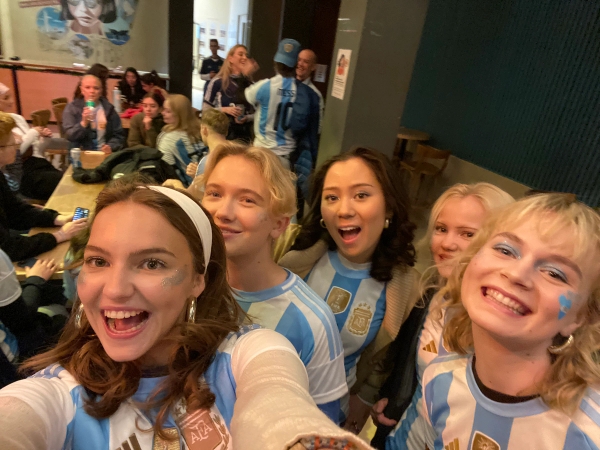
It's entertaining to see how crazy about football Argentinians can get, even if the game doesn't interest you. There were equally loud cheers at the stadium as at the bar, and we tried to join in.
I actually think that everyone who visits Argentina should experience the football culture. It's a must.
I am happy that I have had these experiences and I will be cheering for Argentina in the World Cup this summer, and probably the next time there's a World Cup too!