Swimming in the Naranjo River and a “pura vida” vibe
After four days in Costa Rica, we went on our first excursion as a student group, to the Naranjo River.
This text is translated using AI.
View the original article here.The bus took us out of Quepos and away from the usual tourist areas.
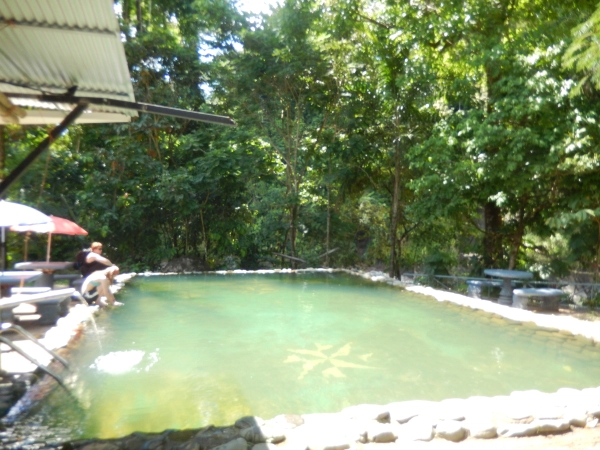
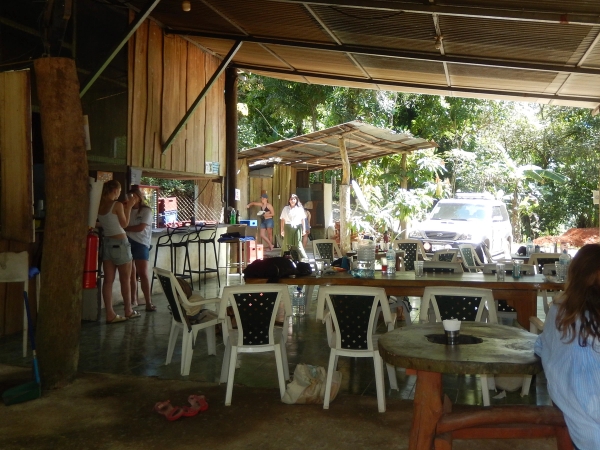
After leaving the main road, we drove along narrow lanes surrounded by dense vegetation and farmland before arriving at Rancho de Moiso, a family-owned farm and business right by the river. This was a place we would never have found on our own, and that was exactly what made the visit especially interesting.

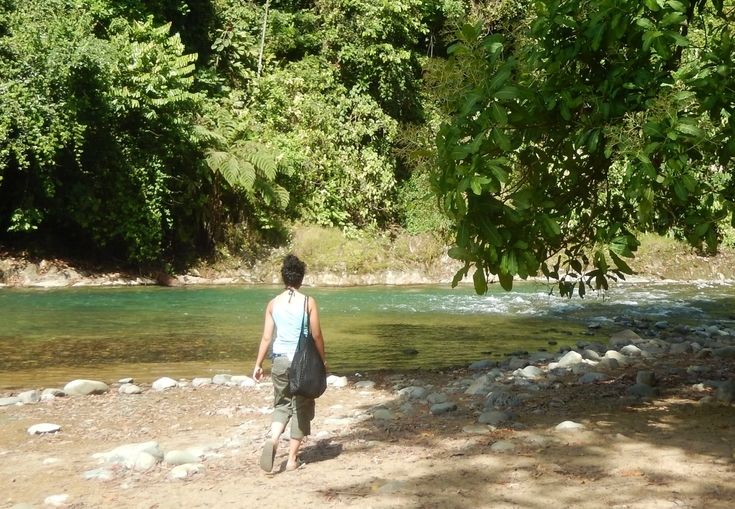
When we arrived, we went straight down to the riverbank to go swimming. The water here was much colder than the ocean we’re used to in Quepos, so it felt really good to cool down properly. You could float along with the current in the river, and all around us it was green everywhere.
It was so peaceful there, a place where you put your phone away without even thinking about it, and just lie there listening to the water, the birds, and people swimming.
“Pura vida” (pure life) is an expression you hear everywhere in Costa Rica. It’s used as both “hi”, “bye”, “how are you?”, “thanks”, and more, but it’s also a kind of motto for the lifestyle here.

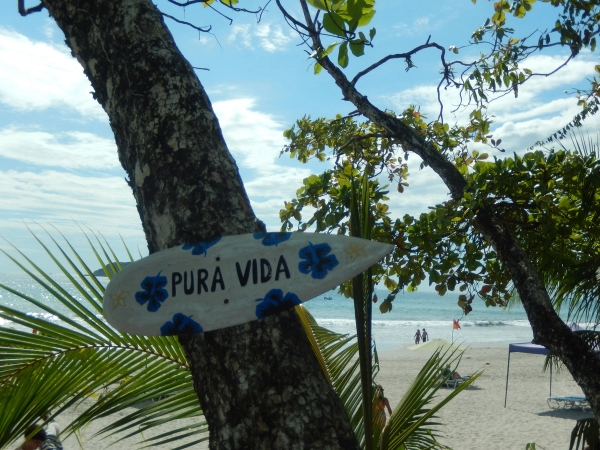
It’s about being present in the moment. By the river I really felt that atmosphere. We had plenty of time to simply enjoy nature, the food, and each other’s company.
This feeling was also reinforced by the fact that we were visiting a family, not a streamlined tourist attraction. Things moved at their own pace, and it all felt completely natural.
Sitting by the river afterward, still a little wet in the hair and with the sounds of nature around us, gave a sense of calm that is hard to plan your way to, but which is perhaps exactly what “pura vida” is trying to express.

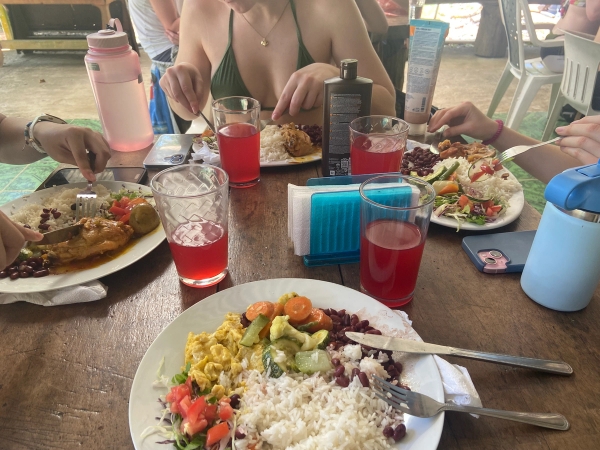
For lunch we were served casado, a dish I’ve already grown very fond of. It’s a classic Costa Rican meal with rice, beans, meat, and vegetables.
A highlight of the day was that we also got to help make tortillas. Everyone made their own tortilla, and they turned out really good! After the meal we had, surprisingly enough, karaoke. I hadn’t imagined this as the kind of place where you’d sing karaoke, but the atmosphere was fantastic, with singing and dancing out in nature.

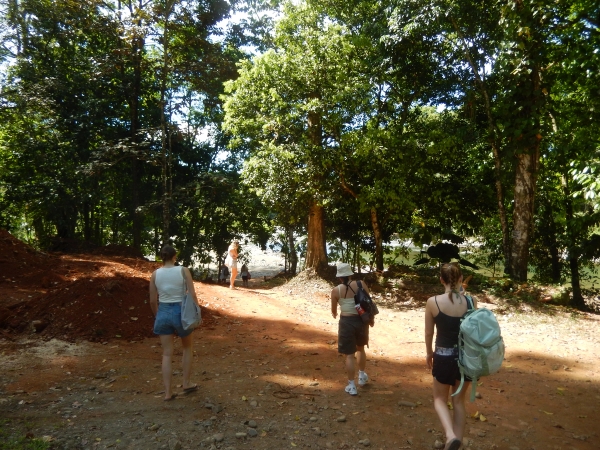
The landscape around Naranjo is typical for this part of Costa Rica, where rivers flow from the mountains through dense rainforest and then continue through agricultural areas.
Here we gained insight into how nature is not just something you ‘visit’, but something that forms the basis for everyday life, work, and the local economy.
In the lecture the day before, we learned about how Costa Rica is actively working to preserve its nature.

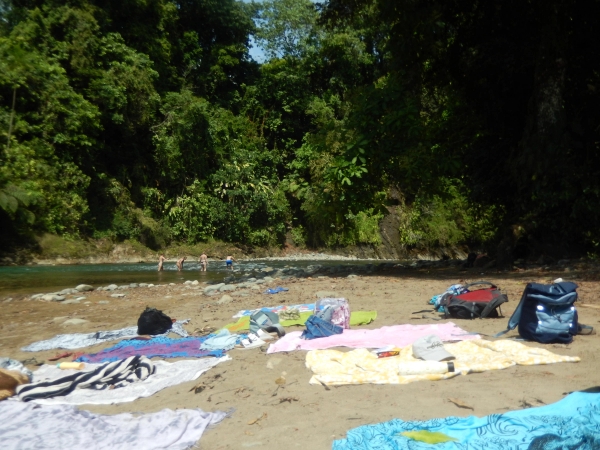
In this part of the country, several rivers have been protected from hydropower development in order to preserve the ecosystems and the importance they have for local communities. As we sat there by the river, this didn’t feel like abstract environmental policy, but something very concrete and real.
This day was a great introduction to life in Costa Rica—not just the nature, but the people, the pace, and the “pura vida” way of life.
It’s easy to think you have to seek out the big, most famous attractions when you travel, but this excursion showed me that the most memorable experiences are often the simpler ones, the ones that might not be listed in the guidebook.