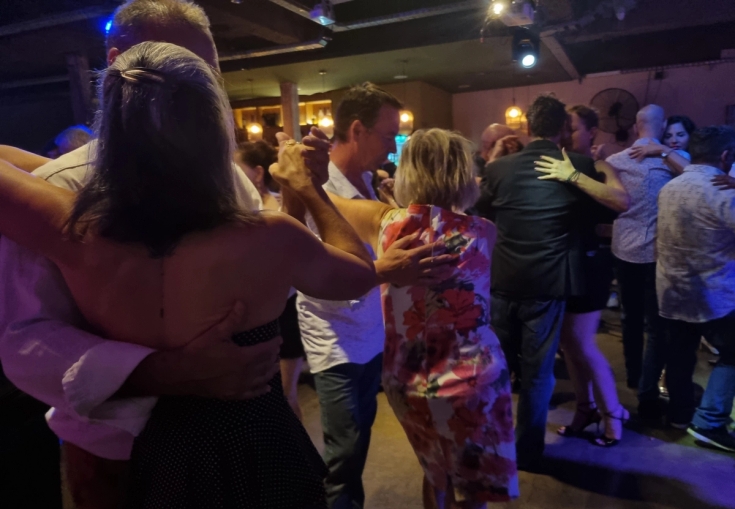
Tango night in Buenos Aires
Already in the first week in Buenos Aires, I noticed that tango has an important place in the culture. Pictures and paintings of dancers in long dresses and high heels decorate street corners, and dancing couples put on performances at the market. So when we were invited to a tango course by Kulturstudier, I couldn’t help but join.
This text is translated using AI.
View the original article here.After all, Buenos Aires is the birthplace of the tango.

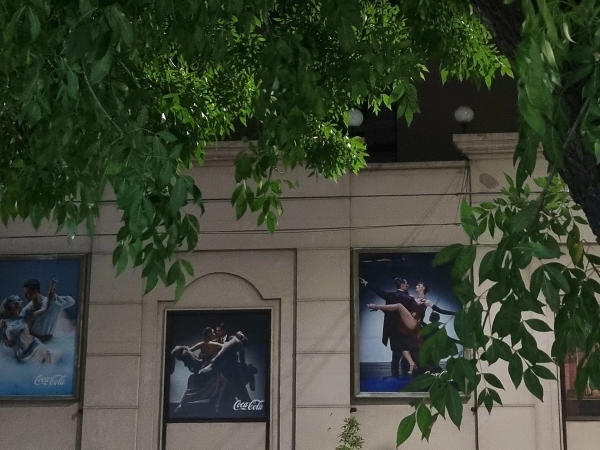
At the end of the 19th century it emerged as a blend of various dance styles. At first, the tango was associated with prostitution and crime, but as the 20th century progressed the dance became more socially accepted, both in the middle and upper classes.
Back in 2009, tango was inscribed on UNESCO’s list of intangible cultural heritage (Knudsen, 2025).


So, just as the dance teachers Suyai Serpa and Lia Pereyra told us, we were not only going to try out a new dance style, we were going to experience a piece of Argentine culture and history.
Still, it’s not exactly easy to move your body in ways you’ve never done before. It didn’t calm our nerves that the place we thought would be a regular dance studio looked more like a bar.
In addition, we quickly noticed that it wasn’t just the Spanish students who were going to dance, because there were also local people standing in line. Both young and old, men and women.

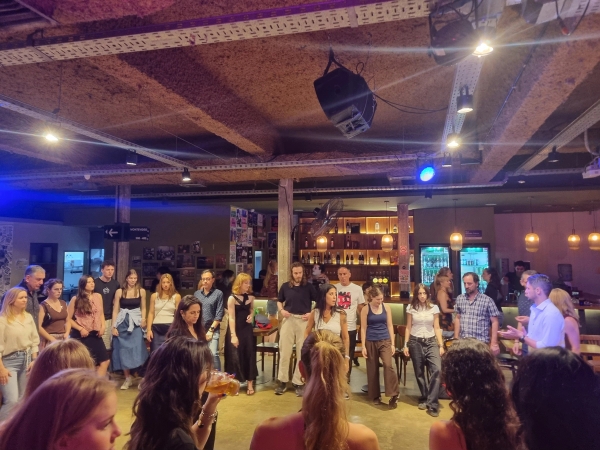
Together we lined up in a circle and the class began. First of all, we learned the most basic thing: how to shift our body weight from one side to the other.
We were supposed to do this in time with the emotional tango music, because when we eventually tried dancing in pairs, we had to keep the same rhythm.
We learned that the chemistry between the dance partners is the most important thing of all. Unlike the kind of dance I’ve done before, there is no choreography in tango.
The partners depend on the leading partner, most often the man, using their whole body to clearly guide their partner in the dance. We were not allowed to talk to our partner while dancing; the movements of our bodies were to be our only language.
It sounds easier than it is. I think many feet were almost trampled to death that evening!

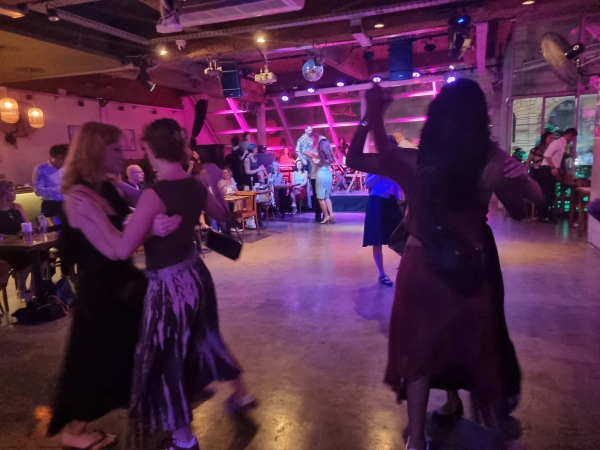
After several awkward attempts at leading and being led by various dance partners, the class was over. The evening, however, was not.
We beginners went to the bar to find something to satisfy our hunger and thirst. At the same time, locals, the so-called porteños, were streaming in, who had also shown up to dance.
We stepped back and watched the real show begin. Those who half an hour earlier had shifted their weight and taken a step forward and back in a circle with us were suddenly spinning dramatically around the floor.
Even though the dancing skills were at different levels, some of us students also got a chance to dance a round with the local dancers out on the floor.

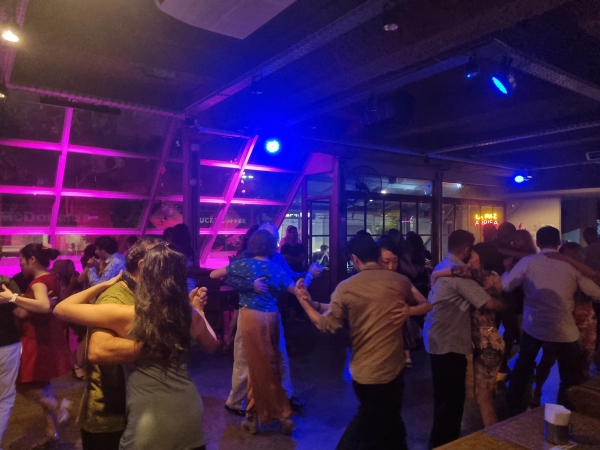
As someone who loves dancing, I found it really fascinating to watch those who truly knew what they were doing let loose on the dance floor. They made the whole thing look effortless and elegant.
Not only were the couples able to lead and follow without crashing into each other or the other pairs, they also managed to use more complicated steps than we had learned during the entire class. They kicked up and between each other’s legs and spun around one another.
Even though it was a lot of fun to try dancing tango myself, I think the end of the evening, with the performance by the local dancers, was definitely the most fun.
Maybe one day I’ll be able to dance like them myself. In that case I’ll have to go to a few more classes. Something that surprised me about the dance was how stiff it felt. The upper body and arms were supposed to be strong, and the hips were not supposed to move.


All in all, it was a very fun experience and something I had been looking forward to trying here in the city.
I still hope I’ll be able to take more dance classes while I’m here. Then at least I’m in the right place, because in this part of the world there’s dancing everywhere!
Our local contacts here in Buenos Aires have already helped us find salsa classes. The bar La Paz Arriba, which hosted the tango night, has several courses already this week! It will probably be quite different from the tango, but that will have to be a story for another time.
Sources:
Knudsen, Jan Sverre: Tango in Store norske leksikon on snl.no. Retrieved 25 January 2026 from https://snl.no/tango