A Day at the Gaucho Farm
Since several of the students went to Brazil to see the carnival, some of us who stayed behind in Buenos Aires wanted to come up with something fun to do.
This text is translated using AI.
View the original article here.Ever since we did some quick Google searches at the beginning of our stay, we had known about the gaucho culture and the possibility of leaving the city to experience it up close.
The gauchos are traditional Argentine herders and farmers. They are really skilled with horses and have a long tradition of song and music. (Siverts, 2024)
Today, some of the gaucho ranches have converted their operations to tourism. We decided to visit one of these traditional ranches. Not only is it a bit of fun to be a proper tourist for a day, we also wanted to learn more about this culture, which is still practiced in the traditional way, and last but not least, we were going to get to ride horses.

We booked tickets for a “Gaucho ranch day tour” on Tripadvisor for around 1500 Norwegian kroner.
For poor students, the payment slimmed down our wallets a bit uncomfortably much. But I had read a blog post on Destinationless Travel from someone who had done a similar experience, and it sounded like you got quite a lot for your money, so we took the chance and went for it.
At half past eight in the morning we were picked up outside the hostel where we’re staying. There we met our guide, Vane. On the way to the farm she taught us about the roads we were driving on and the history of the gauchos.

Historically, they were “Mestizos” and thus had heritage from both Indigenous peoples in South America and Spanish colonists. The word gaucho comes from Old Spanish and means orphan.
In the 17th and 18th centuries, it sometimes happened that wealthy townspeople had children with someone below their own class. The solution to avoid the shame that followed was to send the children out to the countryside, to the gauchos, where these unwanted children eventually became gauchos themselves.
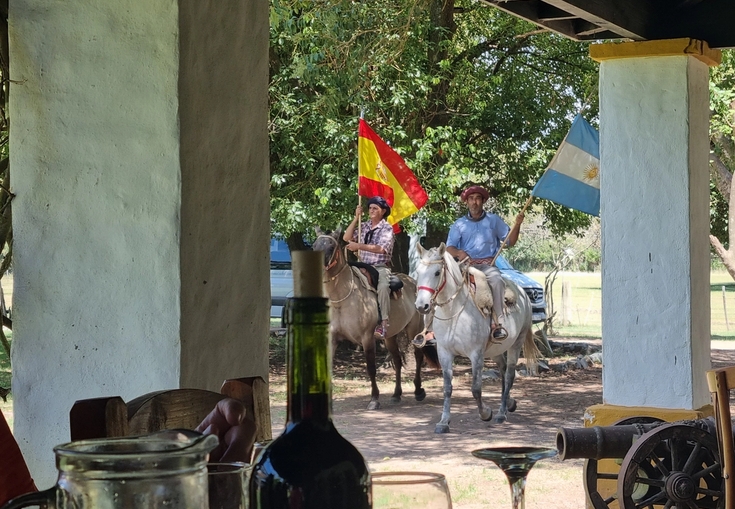
We were also told about the gauchos’ outfits. To this day they still wear the traditional loose shirts, practical trousers, and large hats. Our guide Vane said they need loose clothing so they can move freely while working with the animals. The hats are to protect them from the strong sun they may be standing under all day.
On the way to the farm, we stopped in the small town of San Antonio de Areco.

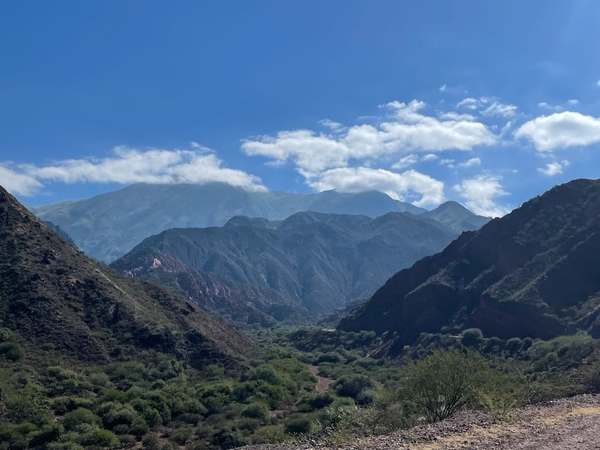
Just like the town, the church is old and rich in history. Inside the church there were tiles belonging to various families who had contributed financially—the further into the church, the larger the contribution and the closer to God.
According to Vane, the town was full of dog lovers. All the dogs, both those with and without owners, were apparently well taken care of. They were even allowed to come into the church.
After the dog-loving city, the next and final stop was the gaucho ranch. Together with our mainly American group of tourists, we were welcomed with cheese, bread and wine, or lemonade.
The farm was full of animals, everything from dogs and cats to peacocks. And the American tourists were quite the characters. So there was more than enough entertainment while we waited for our turn to ride.

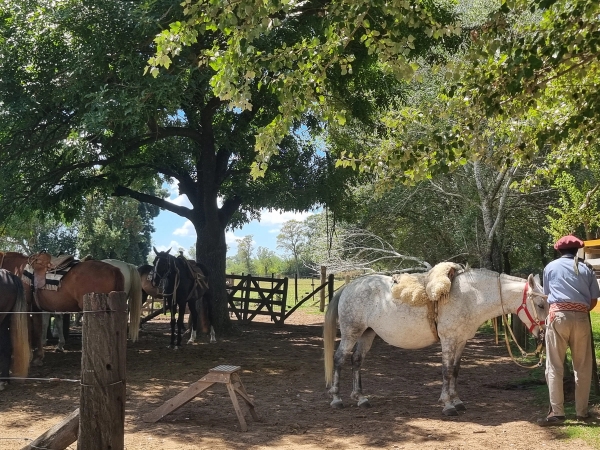
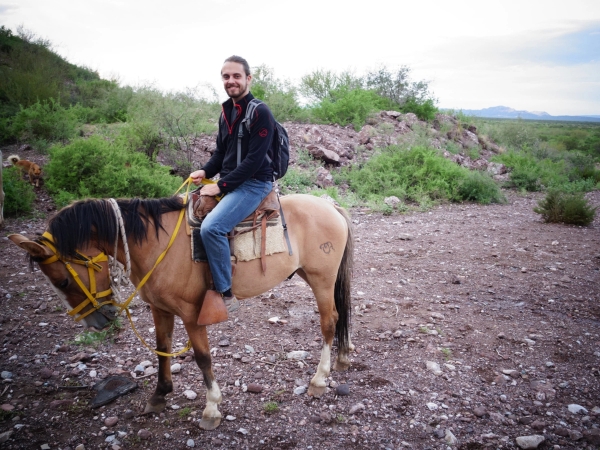
When we were going to be assigned our own horse, in the end it was just my friend and me left, and we were each going to get one of the last two that were available. I told her that I hoped I would get the one that basically just looked like a rather droopy donkey.
I actually haven’t ridden much before, so I was a bit scared of the big horses that looked like they were full of power.
It turned out to be just as well that I didn’t get that lazy excuse for a horse, because she really was exactly as sluggish as she seemed. The girl who ended up riding Margaritha, as she was called, spent most of the trip about 20 meters behind the rest of the group.

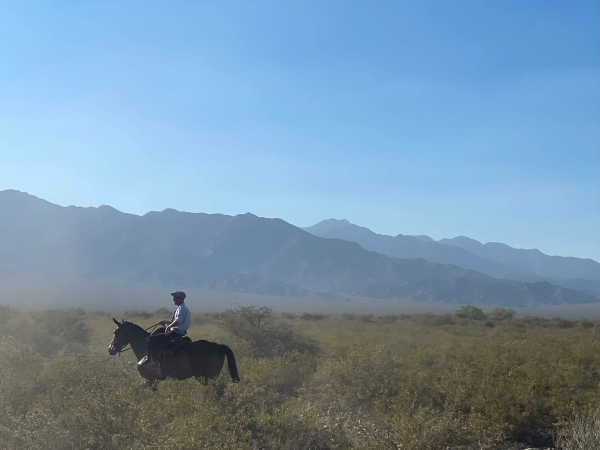
After about twenty minutes of riding, we chatted a bit with the gaucho Juan, who had guided us through the tour, and learned that Margaritha was his own horse who lived on a completely different farm.
Even though it was a lot of fun to ride, a short trip like that was definitely enough for someone like me who doesn’t have much experience with horses.
In any case, we had to end the trip, because the main meal was ready. A proper traditional barbecue with delicious Argentine meat.
The asado, as the grilled meal is called, is not just a meal, it is a cultural tradition, usually held on Sundays with family and friends. We were served one cut of meat after another and ended up completely stuffed.

But it didn’t end there, because we were also going to have dessert. Even after that enormous meal, I didn’t need much convincing when I found out that dessert was ice cream.
The Italian immigrants brought with them the tradition of incredibly good ice cream to Argentina. We took the ice cream to an area with benches under large trees that provided shade from the scorching sun.
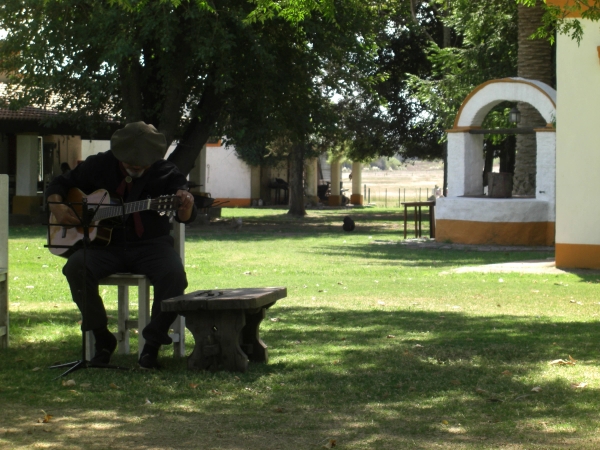
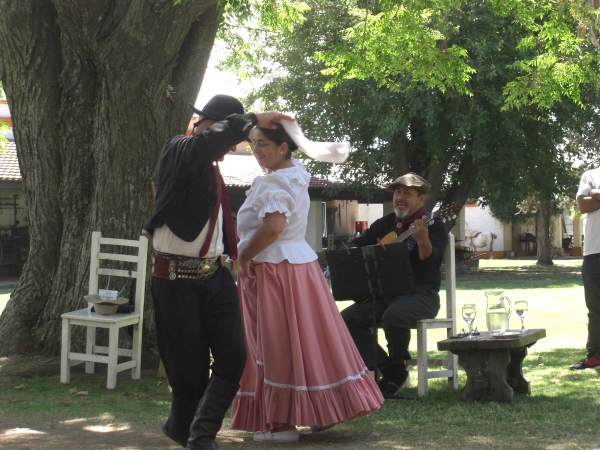
In front of us, local dancers performed a dance show to live guitar music. The dances were a selection of traditional ones from various regions.
Before each dance we were told where it was from, what characterized it, and why. For example, the dance from the area we were in was calm and without large movements in the woman’s skirt, which reflected the landscape we were sitting in.

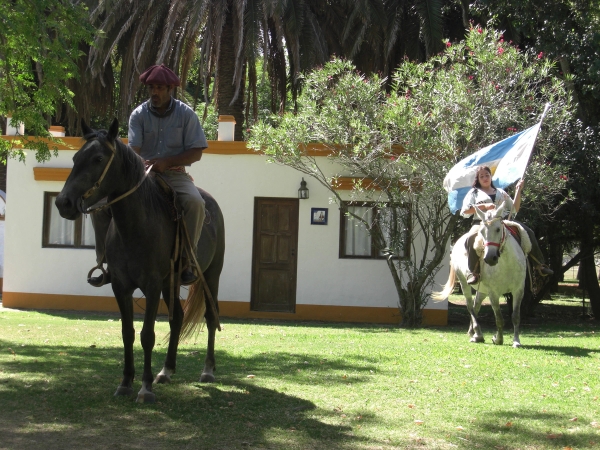
Finally, the gaucho Juan and Margaritha came riding. We had been told not to clap until the show was over so as not to disturb the horse.
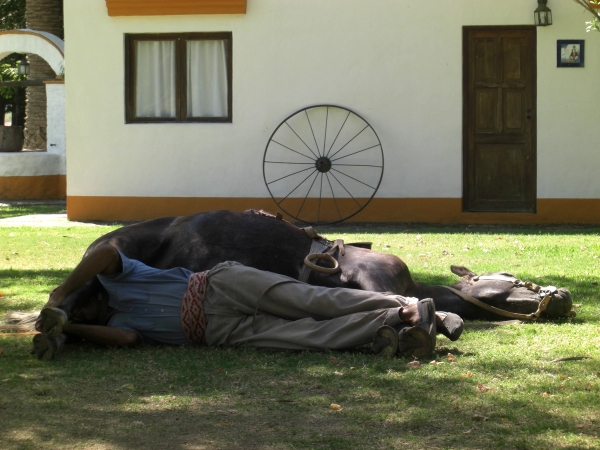
It was easy to understand why, because the first thing he did was to stand up on the horse, so she let herself topple over onto her side. The horse that had previously refused to follow the line during the ride now yielded to the gaucho in a way I didn’t think was possible for a horse!
Juan lay down beneath the horse, between its legs. I had read on the blog about a similar experience, and it said that the gauchos did this during the civil war in Argentina to protect themselves at night.
The atmosphere was unusually calm, and we really got to see how skilled the gauchos are as horse trainers.

Finally, we were driven on the one-and-a-half-hour trip back home. Then I felt like a real tourist in this country that I still want to learn so much more about.
In addition to being very entertaining, I felt that I got to see a completely new part of the culture – something outside the busy city life I’ve started to get used to.
Even though the day cost more than the usual activities here in town, I would say it was worth it.
Considering how flexible they were about picking us up anywhere in the city, how much delicious food and drink we got, and the activities we were able to take part in, we definitely got value for our money!
Sources:
- Destinationless Travel. (2025, September 25). 8 Things to Know BEFORE Booking a Gaucho Tour in Buenos Aires + Review.Destinationless Travel. https://destinationlesstravel.com/gaucho-tour-buenos-aires/
- Siverts, Henning: Gaucho in Store norske leksikon on snl.no. Retrieved March 9, 2026 from https://snl.no/gaucho