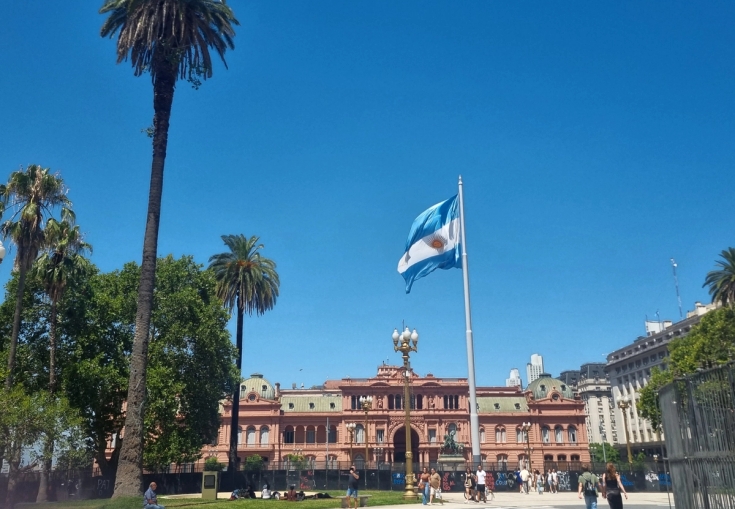
The best thing I’ve done to learn Spanish
In my third year of upper secondary school, I chose Spanish level 3 as an elective. Once I had come that far, I didn’t want to forget everything I had learned. That’s why I decided to spend a year further developing my Spanish.
This text is translated using AI.
View the original article here.At school I had learned some grammar and acquired a basic vocabulary. I could hold simple conversations and read short texts. Here in Argentina, Spanish is divided into grammar and practical Spanish.
I think the level in Spanish 1 with Kulturstudier has been equivalent to the level of Spanish 3 in upper secondary school in Norway. The big difference has been the intensity of the learning.
I noticed that the learning curve shot up when I went from having four hours of Spanish a week to twelve.
With four hours three days a week, what I had previously only barely touched on has actually stuck. It has definitely been an advantage to have local teachers who know the language inside and out and who can always give precise and clear explanations in both grammar and practical Spanish.

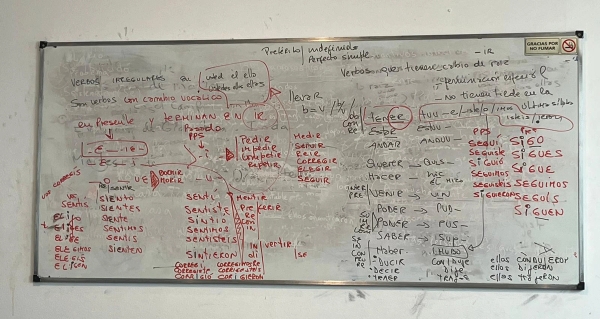
What I notice most is how much more easily the language comes to me now. I understand what others are saying, and I’m able to respond without spending a long time trying to formulate my sentences.
When I travel back to Norway, I will be able to read Spanish texts, listen to audiobooks, and watch movies without major problems. That will in turn make it easier to continue developing the language on my own.

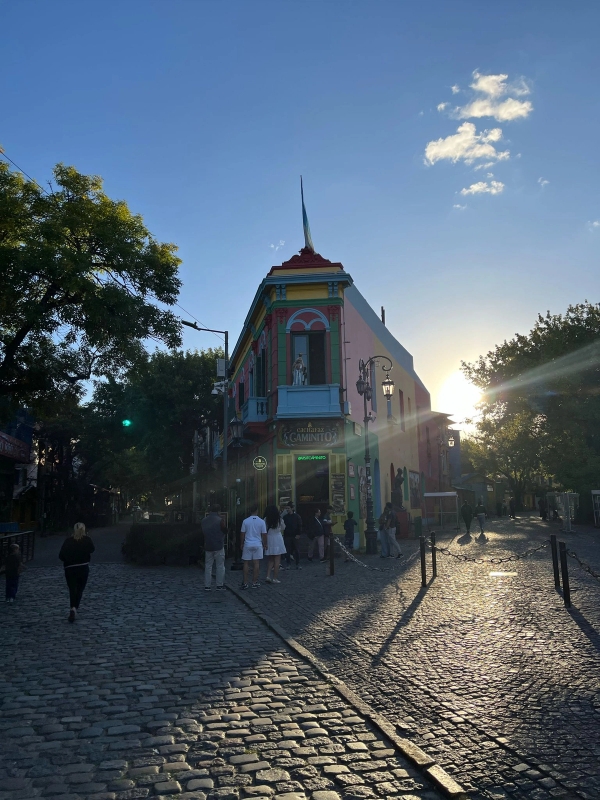
Because the most important thing for learning is to use the language. It’s easy to end up in a “bubble” when you get to know other Scandinavian students, but the language doesn’t have to be an obstacle to that.
On the contrary, it can often be easier to start conversations when there are several of you together.


Through daily use, you also learn to speak more like a real Argentine. Argentine Spanish differs quite a bit from the Spanish from Spain that we learn at school in Norway.
Both pronunciation and vocabulary are different. For example, they don’t use “tú” but “vos”. Words with a double L are also not pronounced like a J sound, but more like a sh sound.
At first this felt unfamiliar, but now it actually feels more natural than the Spanish pronunciation. I’ve also gotten used to the Argentine vocabulary.


My favorite word is probably “boludo”, which is a slightly cheeky word used to call someone a buddy. But it’s also used as an insult to call someone an idiot, similar to the ruder expression “pelotudo”.
It’s incredibly fun to notice that you understand more and more. I especially remember one time when an older man shouted “pelotudo!” at the top of his lungs after a cyclist who had almost run him over.

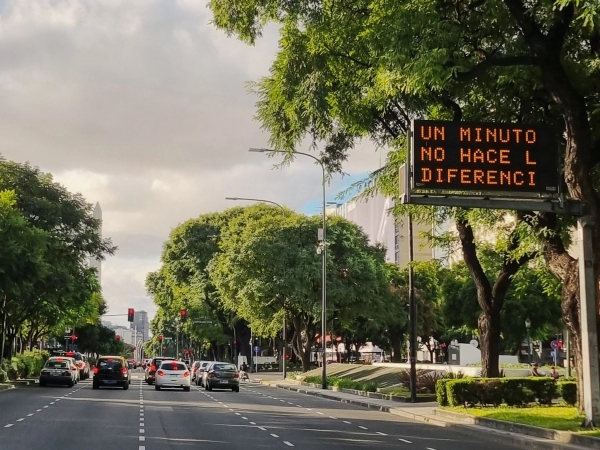
Fortunately for those of us who are trying to learn the language, the local culture helps us do that. In Argentina, it’s common to strike up a conversation with strangers.
At first I found it strange that store employees always asked how I was doing, and that people I met wanted to know where I was from.
Over time I’ve realized that this is really just a perfect way to start conversations and an opportunity to practice Spanish.
You also don’t always need to share that much about yourself, and sometimes it can even be smart to lie a little. For example, it can pay off to say that you’re from a less well-known country than Norway (which people often associate with wealth) when you’re at a market, so the prices don’t get pushed up too much.


What I have learned this semester I will take with me for the rest of my life. Maybe I won’t have any use for haggling at markets once I’m back in Norway, but I hope I can keep learning and that I can come back in a few years with even better Spanish.
This stay is the best thing I could have done to maintain my Spanish skills after getting a good foundation in high school.
Now, for the first time, I feel that I can confidently say that I can Spanish. You can memorize as many grammar rules as you like, but if you don’t actively use the language, it’s impossible to actually get good at it.